What Drone Photography and Video Add to Your Local Marketing
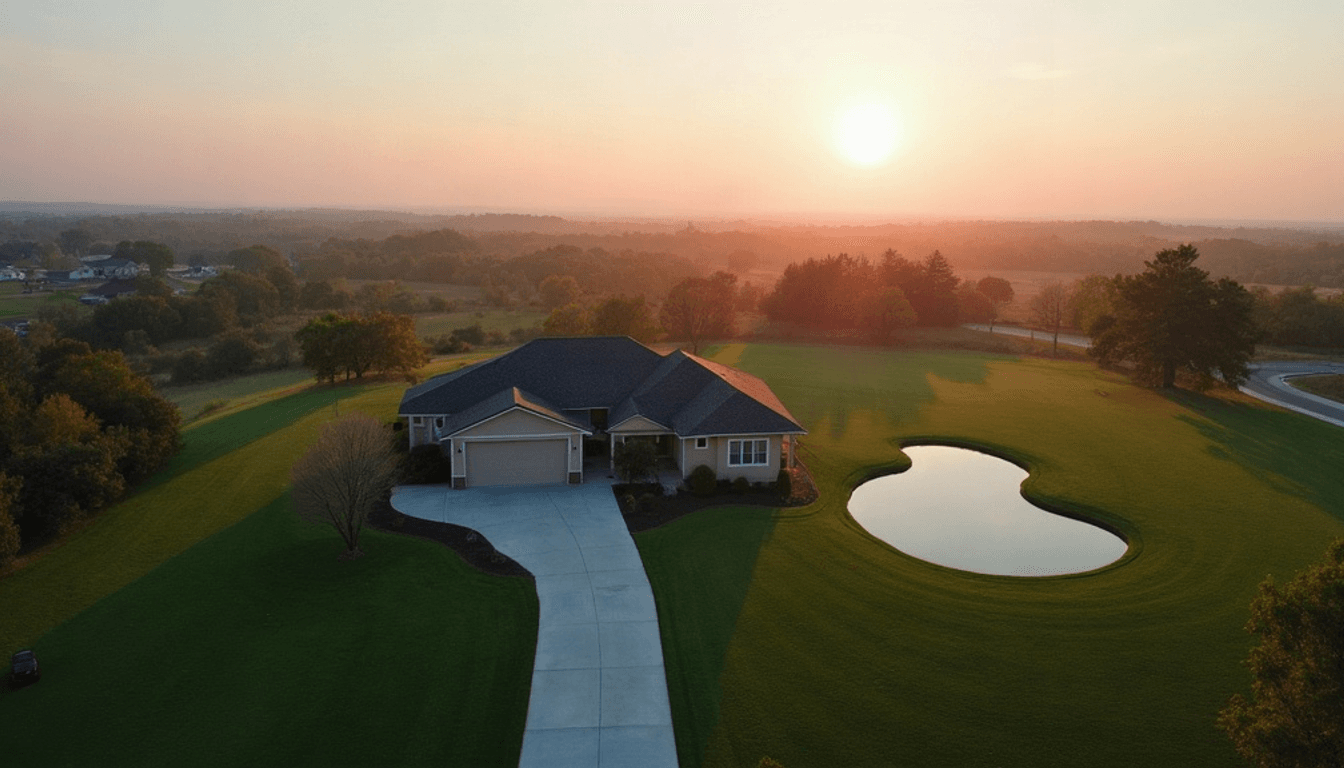
Most of the photos a business puts online are taken from the same spot: eye level, standing on the sidewalk or in the parking lot. That is fine for a lot of things, but it never shows the whole picture. A drone changes the vantage point, and that one change does more for a listing or a business page than most people expect.
We see this a lot with real estate agents, contractors, and local shops around central Indiana. Drone media has gone from a novelty to a normal part of the marketing toolkit. Here is what it actually adds, where it pays off, and where it does not.
Why the Aerial View Works
People make quick judgments online. A buyer scrolling through listings, or a customer looking for a venue or a roofer, decides in a second or two whether to keep looking at your page or move on. An aerial shot stops the scroll because it is different from everything around it. It also answers questions a ground photo cannot: How big is the lot? What is next door? How close is the water, the highway, the school, the downtown strip?
Context sells. A house on two acres looks like a house in a ground photo. From the air, it looks like two acres. A restaurant with a patio that backs up to a park looks like a storefront at street level, but from above you see the whole setting, and that setting is often the reason someone picks you.
What It Does for Real Estate Listings
Real estate is where drone media has the clearest payoff, for a simple reason: the thing being sold is a piece of land with a building on it, and a drone is the only practical way to show both at once. Here is what agents typically get out of it:
- Lot and boundary shots. Buyers want to understand the property line, the driveway, the outbuildings, and the trees. One high shot does the job of a dozen walking-around photos.
- Neighborhood context. A short clip that starts over the house and pulls back to show the street, the park, and the way into town tells a buyer what living there feels like.
- Roof and exterior condition. A clean, well-kept roof is a selling point. Showing it from above is more convincing than writing "new roof" in the listing.
- Rural and acreage properties. For farms, wooded lots, and land with ponds or creeks, there is no substitute. Ground photos simply cannot communicate scale.
Listings with aerial media look more professional, and that reflects on the agent as much as the property. Sellers notice it when choosing who to list with, which makes drone work a business development tool, not just a marketing expense.
What It Does for Local Businesses
This is the part that gets overlooked. Drone media is not only for houses. Any business where the location, the size, or the setting matters can benefit.
Businesses with a physical footprint
Event venues, campgrounds, golf courses, wedding barns, orchards, storage facilities, and car dealerships all have the same problem: the thing people need to see is bigger than a phone camera frame. An aerial photo of a venue shows the parking, the grounds, and the layout in one image, which is exactly what someone planning an event wants to know.
Contractors and trades
Roofers, excavators, landscapers, concrete crews, and builders do work that is hard to photograph well from the ground. A before-and-after drone shot of a finished roof, a graded lot, or a new patio is a portfolio piece that looks far better than a crooked photo taken from the truck. It also shows the full scope of a job, which helps when quoting similar work.
Developments and community events
A new subdivision or a downtown festival reads differently from the air. Developers use aerial progress shots to keep buyers updated, and event organizers use them to show how well-attended something was.
Where Drone Video Beats Drone Photos
Photos are the workhorse. They go on listings, Google Business Profiles, websites, and flyers. Video is the attention-getter, and it belongs in a few specific places:
- Social media. A 15 to 30 second aerial clip of a property or a business does well on Facebook, Instagram, and TikTok because it is visually interesting and does not require any explanation.
- Listing and landing pages. A short video near the top of a page keeps people on it longer, and that extra time is where decisions happen.
- Email and texts to prospects. Sending a buyer a 20 second flyover before a showing sets the tone. The same goes for a venue sending a clip to a couple comparing options.
Keep aerial video short. The slow, sweeping, three-minute montage with dramatic music had its moment, but attention spans do not support it. One or two clean moves, a clear subject, and a quick cut to the next angle work better.
What Separates Good Drone Media From Bad
Drones are affordable now, and plenty of people own one. That does not mean the footage is usable. A few things that make the difference:
- Timing and light. Midday sun flattens everything and throws hard shadows. Early morning and late afternoon give you the warm, dimensional look people associate with professional work.
- Smooth, intentional movement. Jerky pans and sudden altitude changes are the giveaway of amateur footage. The best aerial clips look almost slow.
- Composition. Flying up and pointing the camera down is not a shot. The operator should frame the subject and think about where the photo will be used.
- Editing and color. Raw drone footage often looks washed out. Proper color correction and a little stabilization make a big difference.
- Licensing and safety. Commercial drone work in the United States requires an FAA Part 107 certification, and there are airspace rules that vary by location. A licensed operator knows where they can and cannot fly, which protects you if anything goes wrong.
That last point matters. If a photo or clip is being used to sell something, it is commercial use, and the person who shot it needs to be certified for that. It is a fair question to ask.
When Drone Media Is Not Worth It
We would rather be honest than oversell it. Drone media does not help much if:
- Your business is a single storefront in a strip mall with nothing distinctive around it.
- The property is a small lot in a dense neighborhood where the aerial view just shows rooftops.
- Your marketing problem is somewhere else entirely, like a slow website, a weak Google Business Profile, or no reviews.
In those cases, good ground-level photography and fixing the basics will do more for you. Drone media is a multiplier on a solid foundation, not a replacement for one. If you are not sure which bucket you fall into, our services page covers the other pieces, and we will tell you honestly if aerial work is not the right spend.
How to Get Started
If you think drone media could help, here is a simple way to approach it:
- Decide where the images or video will actually be used. A listing, a website hero, and a social campaign all have different needs.
- Pick one or two properties or locations to start with rather than trying to shoot everything at once.
- Schedule around good light and reasonable weather. Wind and rain are the two things that cancel drone shoots.
- Plan to reuse the content. A single shoot can produce listing photos, a social clip, and a web banner.
Leucocholy Media provides licensed drone photography and video for real estate agents, contractors, venues, and local businesses in Pendleton and the surrounding area. If you want to see what your property or business looks like from a better angle, get in touch and we will walk you through the options and what it would cost.